Armor Series
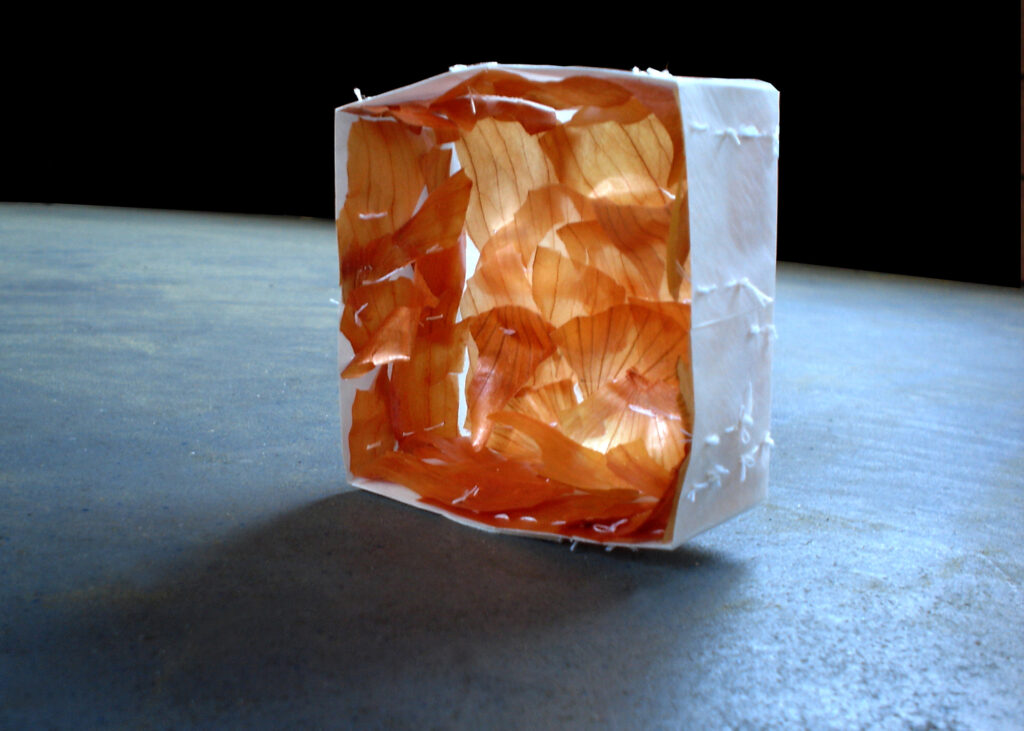
Something Like Armor. Tracing paper, onion skins, thread. 3 x 3 x 1.5 inches.
I started the Armor series in 2005. I was peeling an onion for dinner, and I stopped to hold an onion skin up to the light. I was struck by how it looked like both stained glass and human skin with veins. It was as gorgeous as a precious gemstone, yet worthless “trash” that my cooking hands were eager be rid of.
I thought about how the onion skins were the “armor” of the onion, yet it was the pungent onion juice inside that actually repelled. The skins were so fragile, they were tearing and disintegrating as I worked with them.
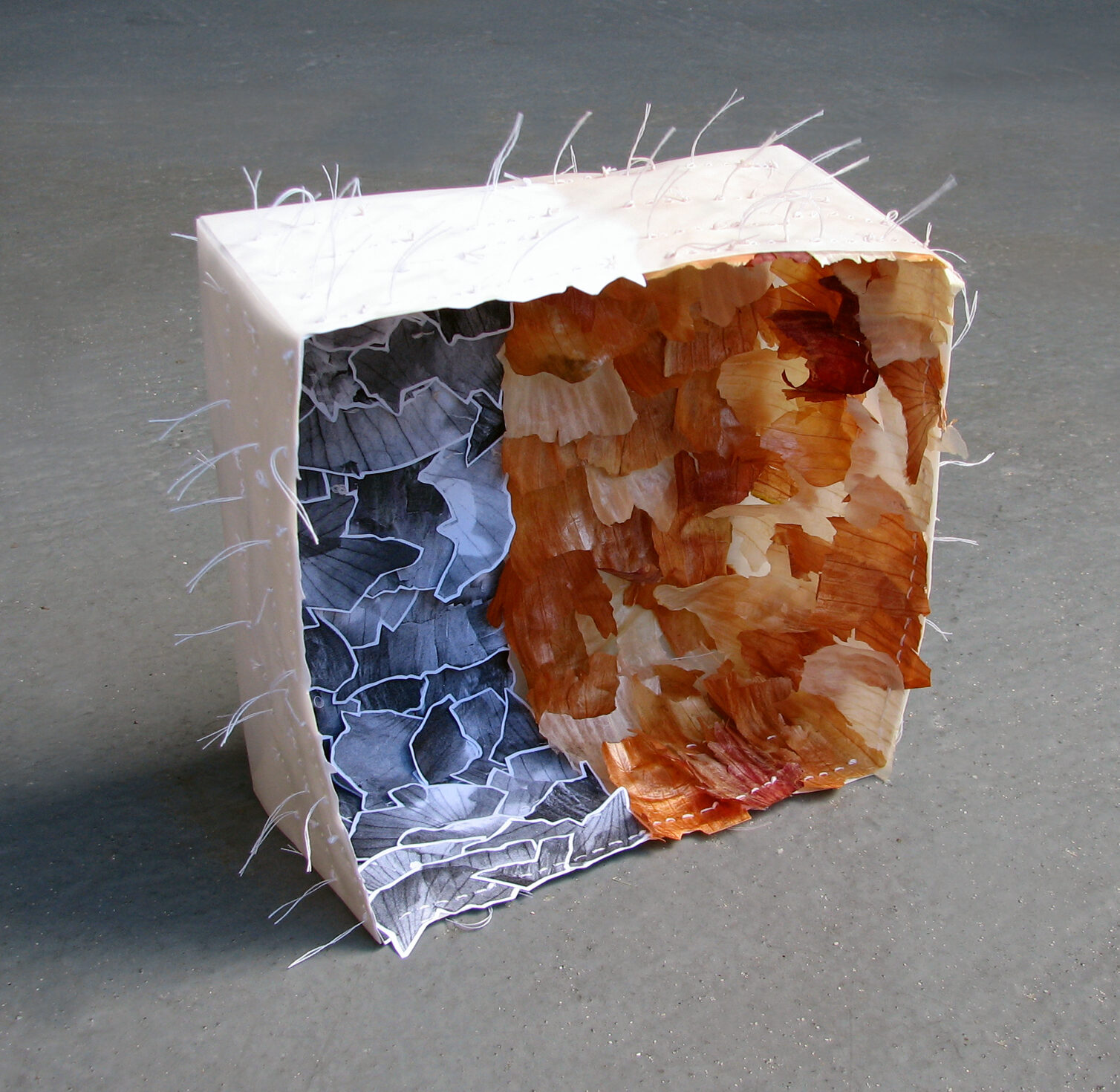
Someone Else’s Armor II. Tracing paper, onion skins, photocopies of onion skins, thread. 7 x 7 x 3.5 inches.
For subsequent pieces, I focused on copies, duplicates, and “fakes” of the onion skins. I photocopied individual onion skins in black and white, cut them out, and sewed them next to the authentic skins.
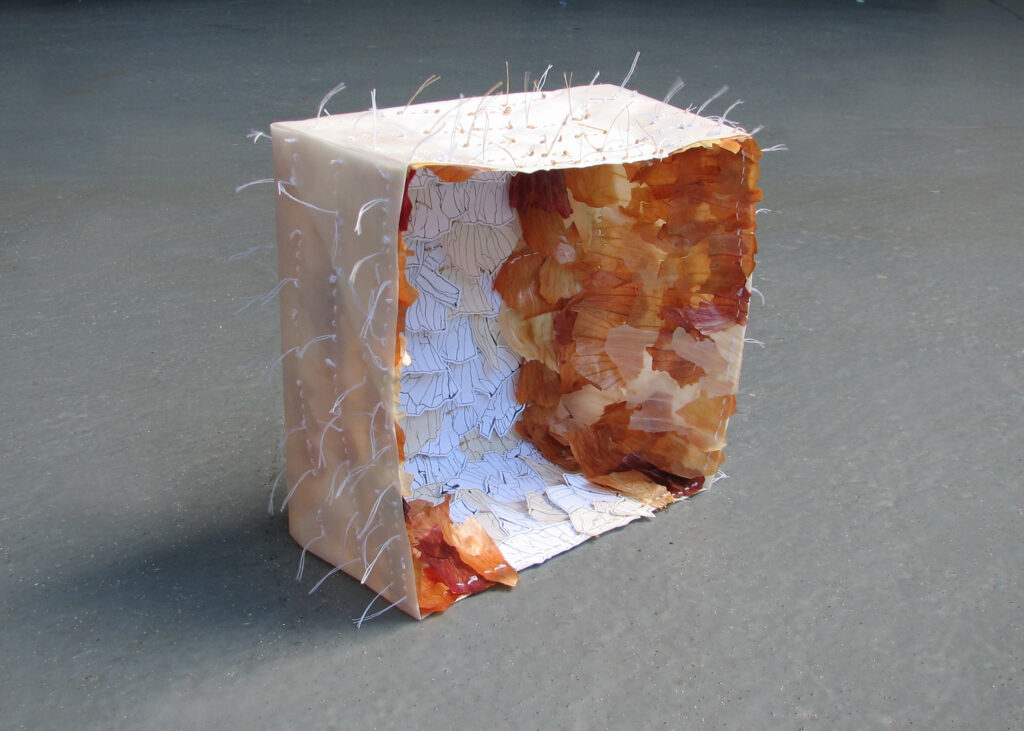
Someone Else’s Armor III. Tracing paper, onion skins, drawings of onion skins, thread. 7 x 7 x 3.5 inches.
I worked with a lot of “splits” in the pieces, both visually and conceptually. In certain pieces, I hand-drew individual onion skins one-by-one onto vellum and then cut them out and stitched them to the center of a paper box. I filled either side of the box with natural onion skins, effectively splitting the object into three parts.
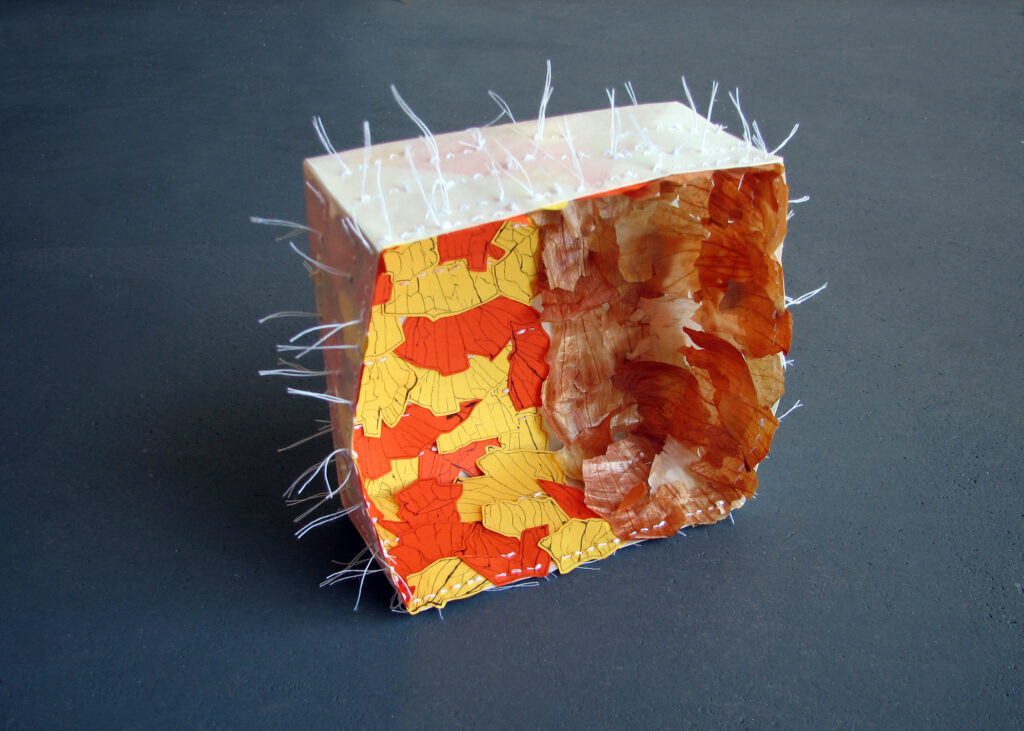
Someone Else’s Armor IV. Tracing paper, onion skins, hand drawn onion skins on colored paper, thread. 5 x 5 x 2.5 inches.
In some instances, I photocopied my drawings of the onion skins — moving further from the originals. I used garish yellow and orange photocopy paper. Though the color and lines evoke the natural skins, they are ultimately cartoon-like in appearance.
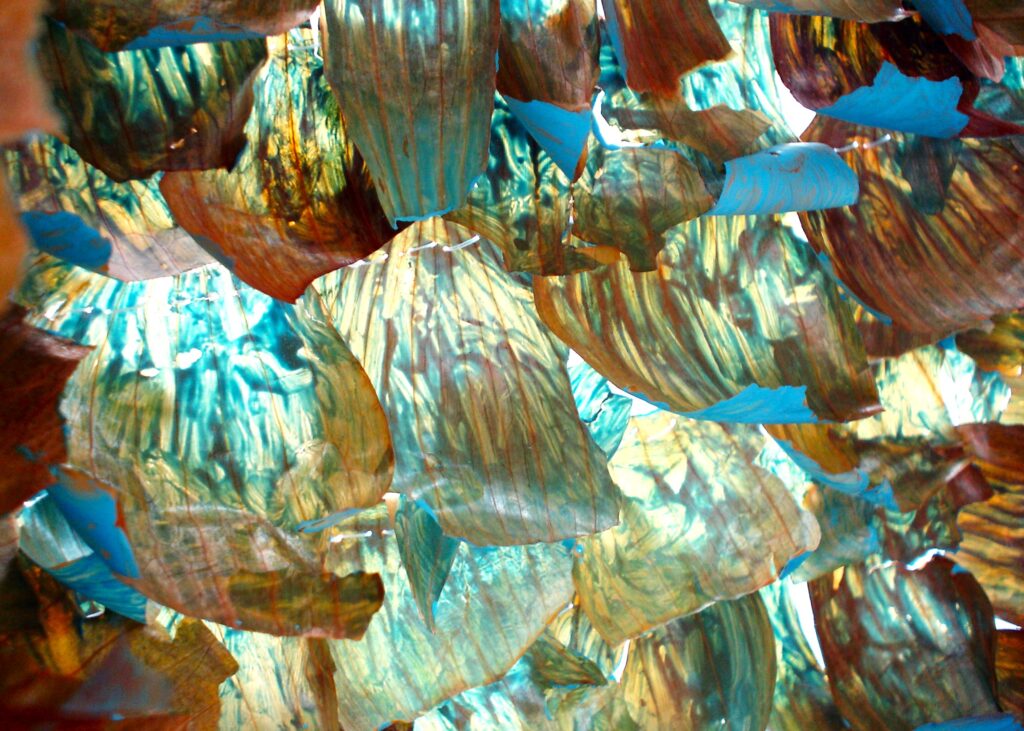
Detail of Tamper. Tissue paper, onion skins painted blue on reverse, thread. 7 x 7 x 3.5 inches.
I also experimented with painting the onion skins on the back. When viewed under normal light, the orange color of the onion skins dominates. But, when light is allowed to shine through the box, the painted color becomes evident.
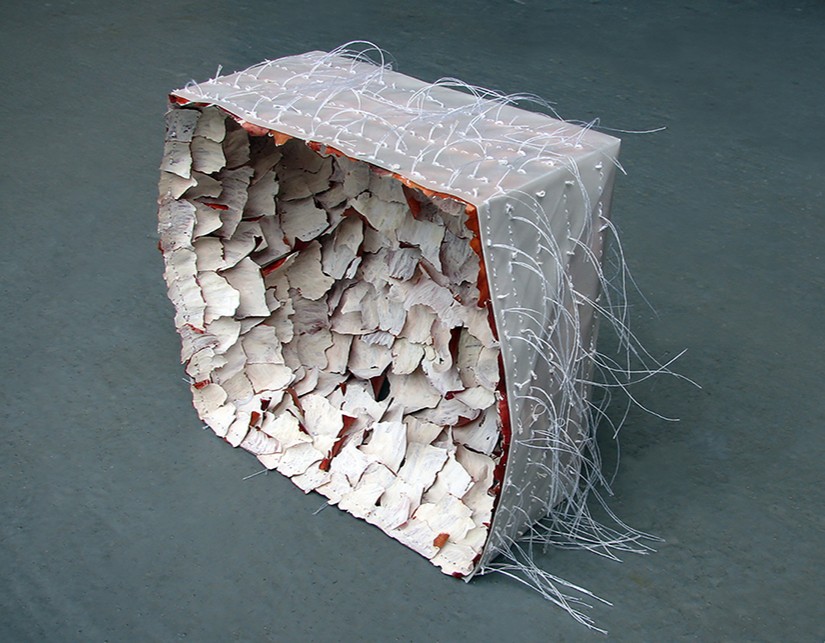
Underbelly Armor. Tissue paper, onion skins painted white on reverse, thread. 7 x 7 x 3.5 inches.
And then I tried painting the individual onion skins a solid color, so that the natural color is only revealed by light. I also wanted the stitched threads to play a bigger role, so they became longer. (I had to brush them gently with a comb before displaying the pieces, just like brushing a toddler’s wispy hair.)
Stitching the onion skins to the inside of the paper boxes is extremely difficult. The skins are brittle and fall apart when pierced with the needle. While sewing, the thread tends to catch nearby skins and rip them. I had to crane my neck in unnatural positions to make each stitch. For thicker areas where several layers of paper overlap, I developed deep cuts and scabs on my fingers from handling the needles. It generally took weeks of work to make a single onion skin box.
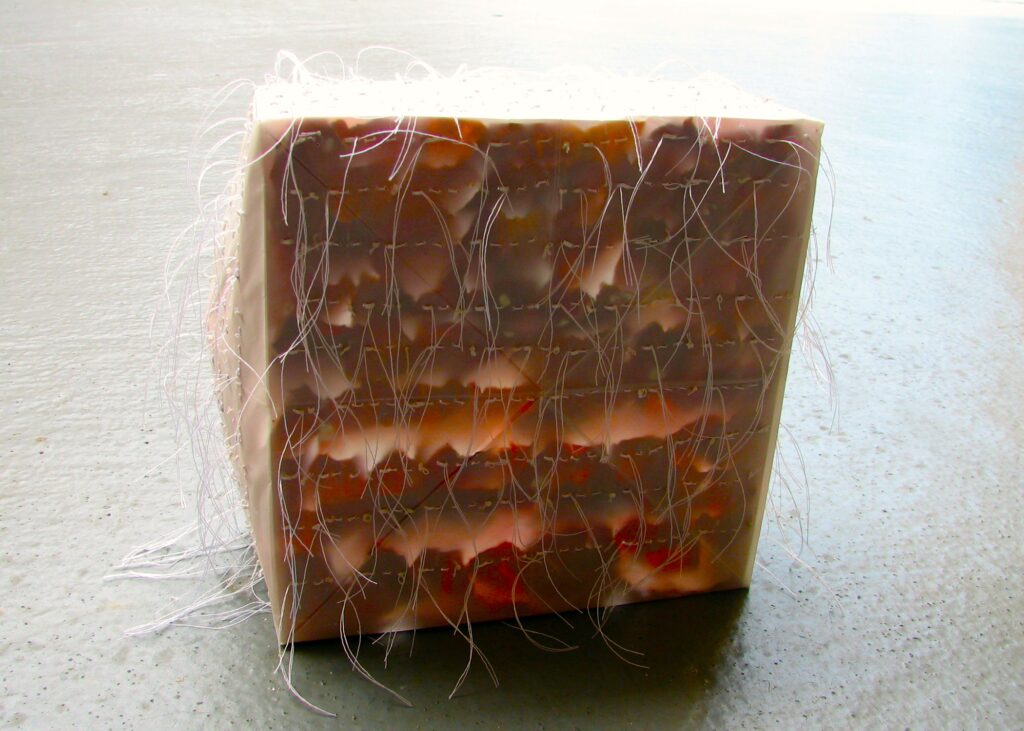
Detail of Underbelly Armor. Tissue paper, onion skins painted white on reverse, thread. 7 x 7 x 3.5 inches.
I ultimately liked how the stitching started to look line lines of handwriting across the surface of each paper box. Although, as I became better and better at stitching the fragile onion skins, the feedback from viewers was that the sculptures looked machine-sewn, rather than hand-made. I had somehow accidentally erased evidence of the anguish and difficulty of the process by working harder and becoming very skilled.
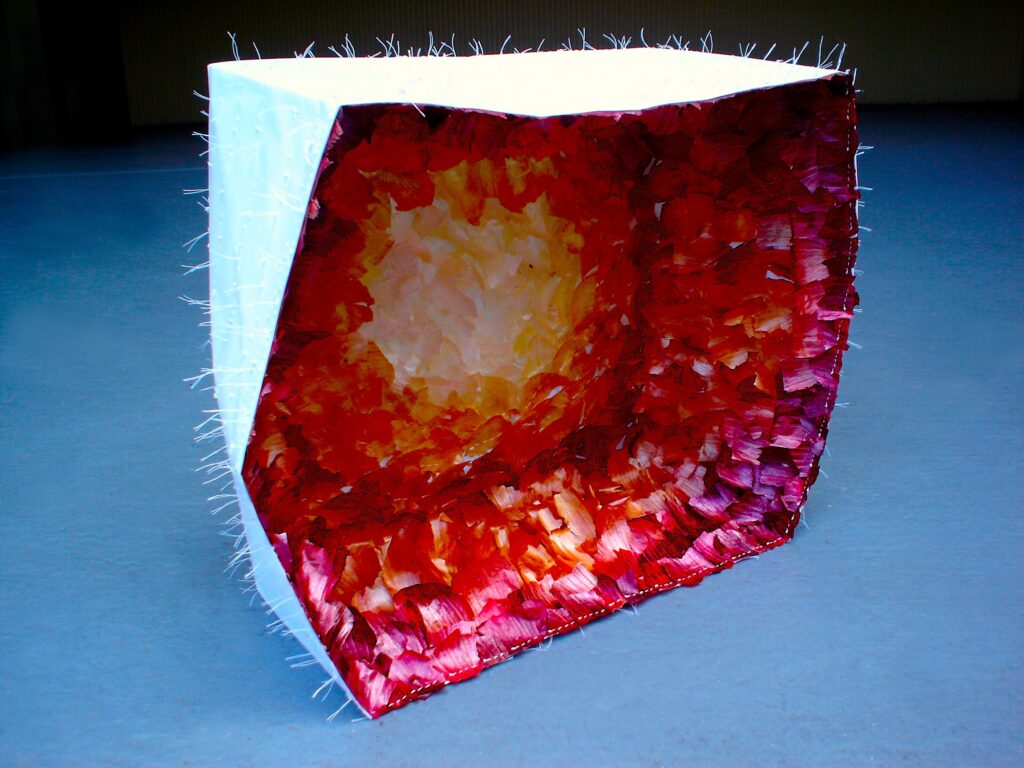
Fading Armor. Vellum, onion skins, thread. 15 x 15 x 7.5 inches.
I experimented with larger, knee-high vellum boxes, and creating gradients with the natural onion skins. I needed so many onion skins for my project, I asked the manager at my local grocery store to allow me collect the loose, unwanted onion skins that littered the produce display in the store (he said “no”).
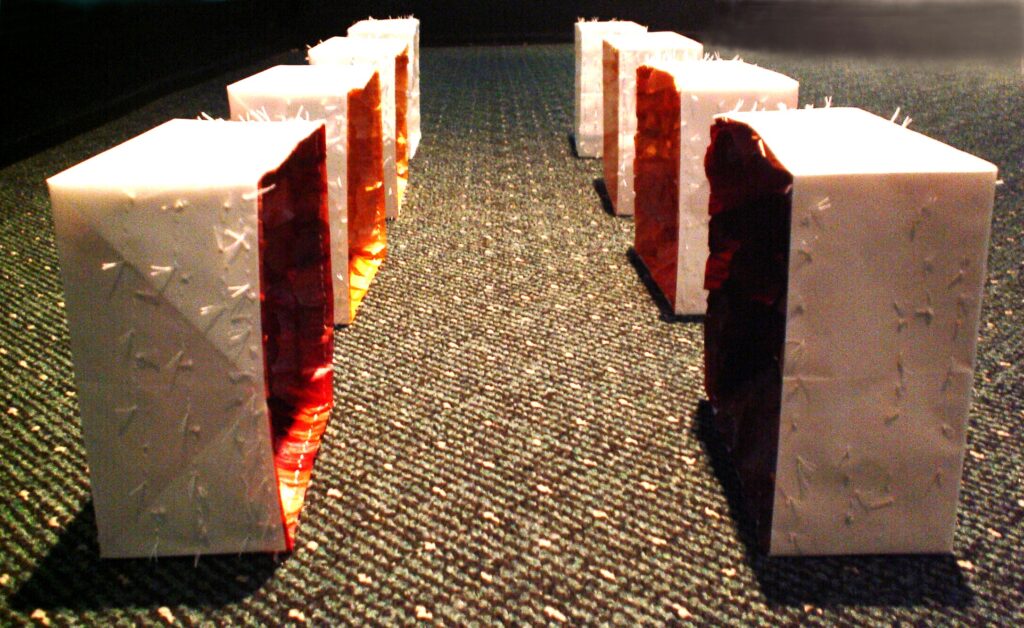
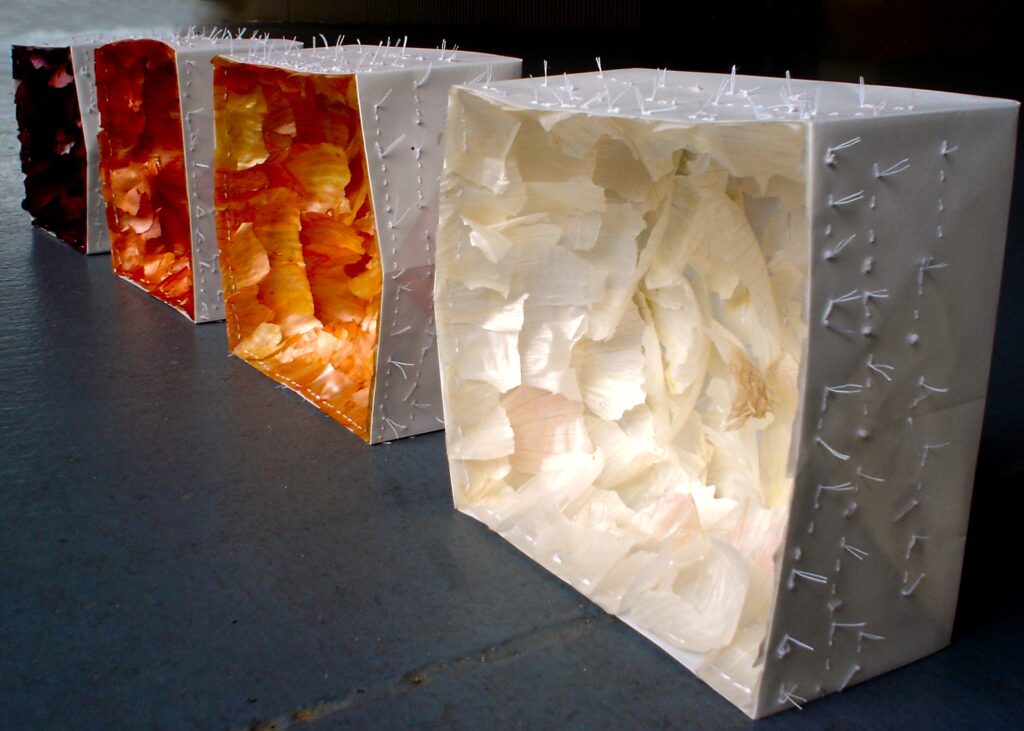
Installation views of Echoing Armor. Vellum, onion skins, thread. Approximately 6.5 x 40 x 20 inches.
There are roughly four colors of onions easily available: white, yellow, orange, and purple-red. I experimented with creating duplicates of each color that face each other, with the blank paper backs of each box facing outwards, and the colors only visible inside.
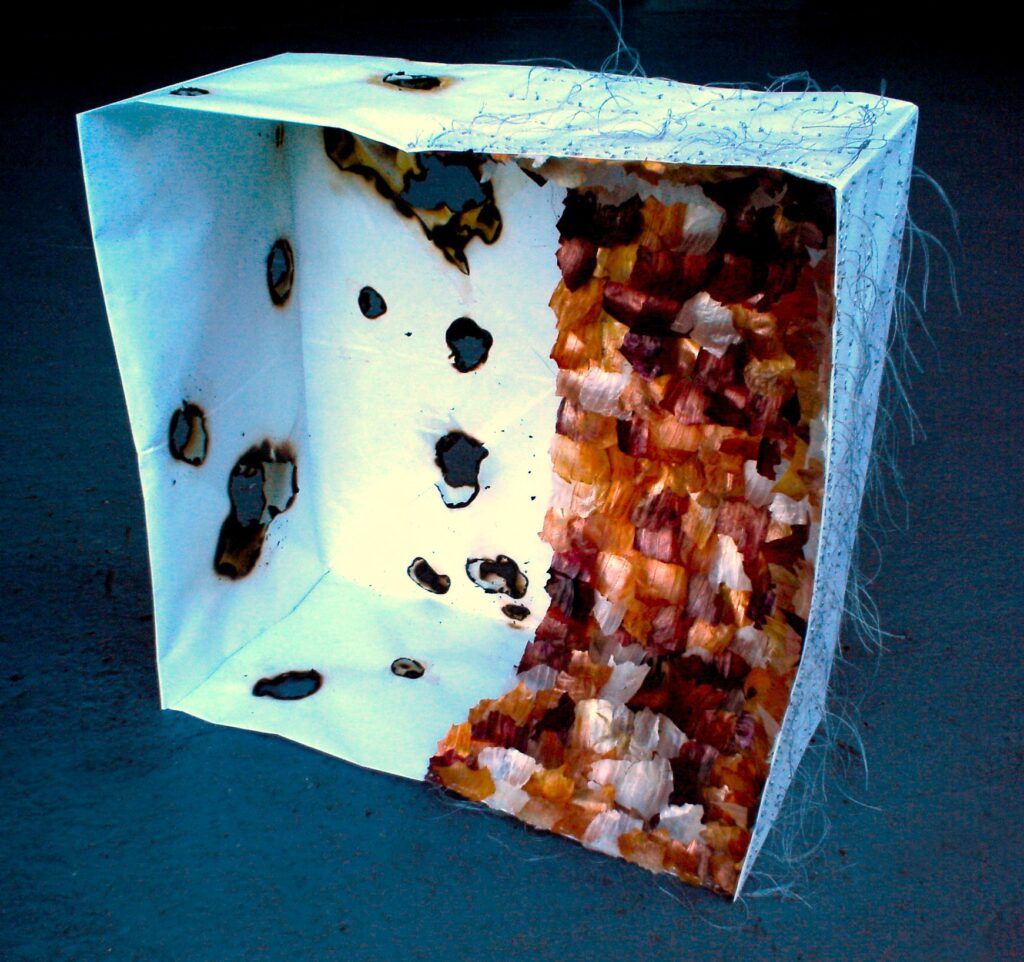
Split Armor. Vellum, onion skins, thread, burning. Approximately 15 x 15 x 7.5 inches.
I also subjected some pieces to burning or cutting, to create holes or openings in the boxes.
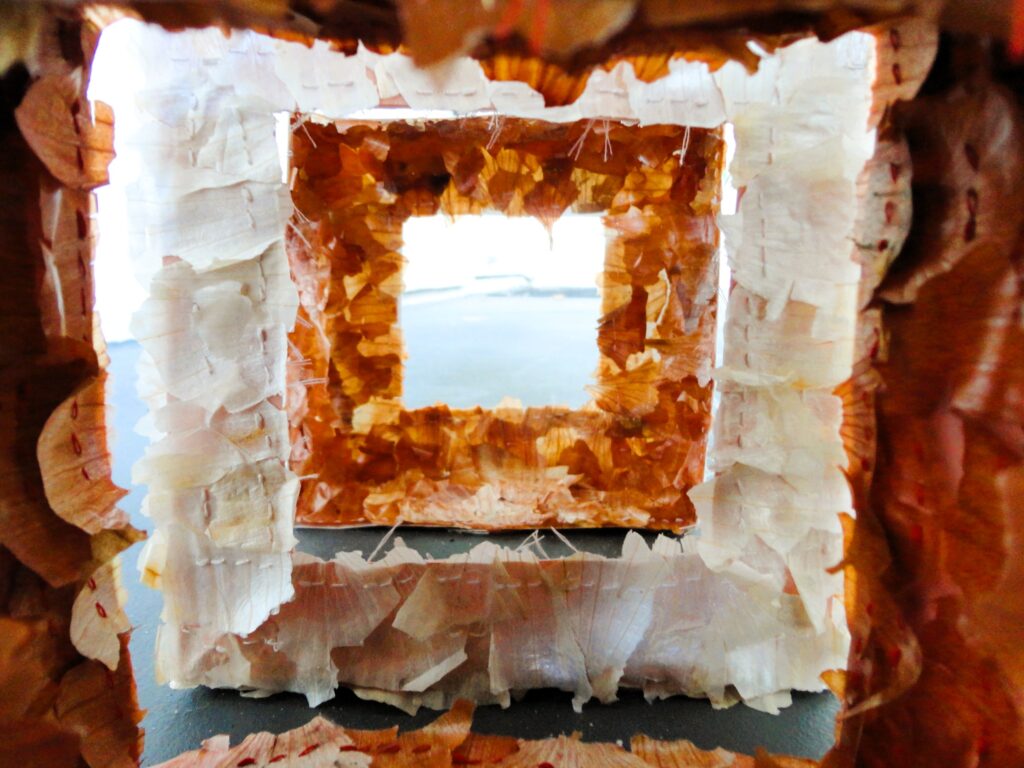
Installation view of Open Armor. Vellum, onion skins, thread. Approximately 7 x 7 x 20 inches.
In some instances, the holes looked like damage. In others, the subtracted areas were more like architectural openings. Like windows, which allowed further discovery, but ultimately less privacy.